
Valve Stem Replacement: What It Costs and When You Can DIY
Last updated: September 26, 2026 · Reading time: 7 min
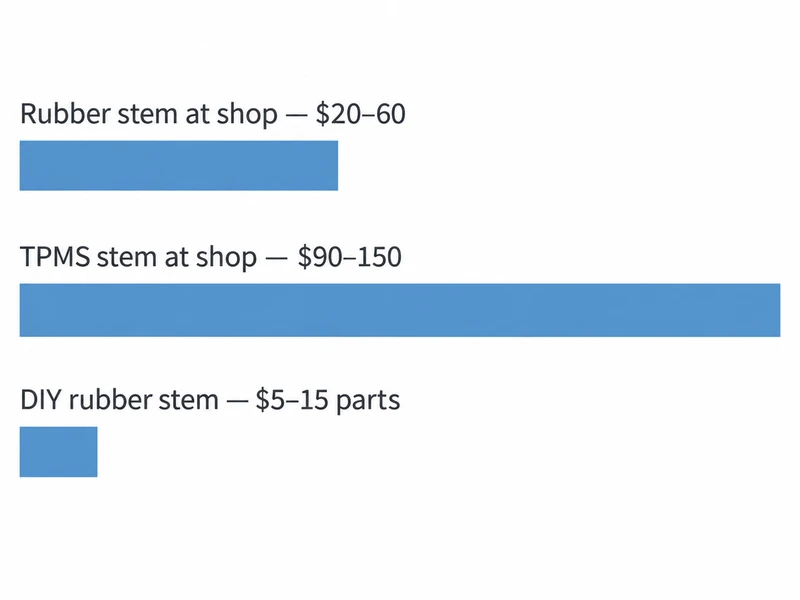
A shop charges $20–$60 per tire for a standard rubber valve stem, $90–$150 with TPMS. First confirm the leak isn't just the valve core — that's a $3, two-minute fix. Rubber stems are DIY-able with a puller tool; TPMS sensor stems belong to the shop.
First: Is It the Core or the Stem?
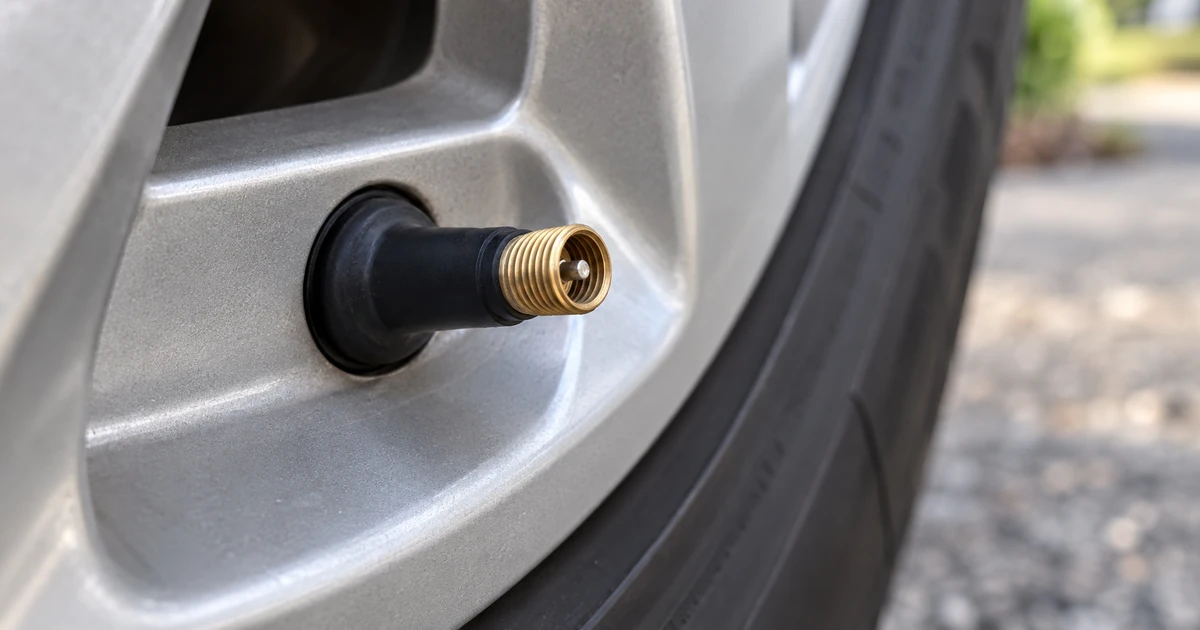
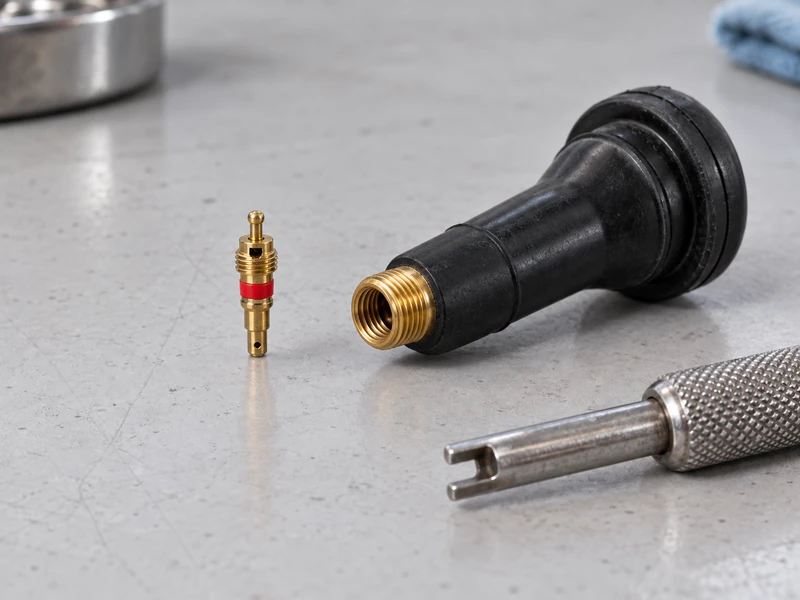
Half of all "valve stem leaks" aren't the stem at all. The stem is the rubber or metal body through the rim; inside it screws the valve core — the actual spring-loaded valve. The core is a $3 part that unscrews with a cheap core tool in under a minute, no tire work, no shop.
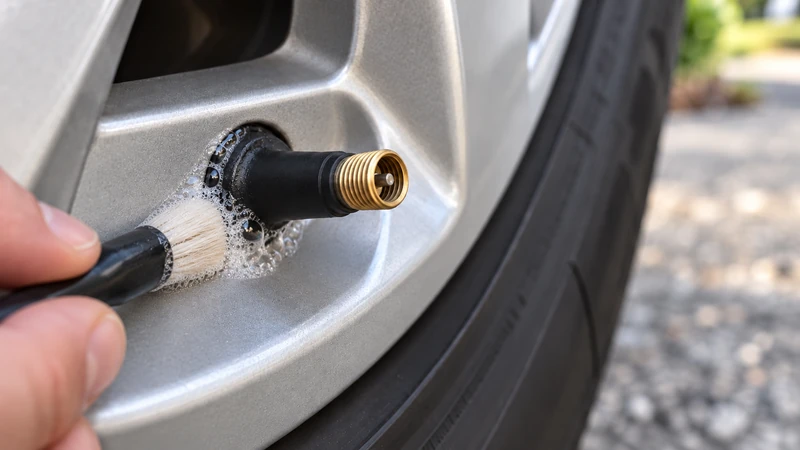
Diagnose before you spend: brush soapy water over the whole stem. Bubbles at the tip = core leaking → new core, done. Bubbles at the base, where the stem meets the rim = the stem body → that's the replacement this article is about. (The full leak-hunt routine, including bead and TPMS leaks, is in the valve stem guide; slow leaks with other suspects are in why tire pressure keeps dropping.)
What Replacement Costs
| Job | Parts | Total | Note |
|---|---|---|---|
| Standard rubber stem — shop | $2–$5 | $20–$60 per tire | Under 15 min on a tire machine |
| TPMS sensor stem — shop | $25–$60+ | $90–$150 per tire | Service kit + relearn included |
| Standard stem — DIY | $5–$15 | Parts + $10–$25 puller tool | Rubber snap-in only |
| Valve core only — DIY | $3–$5 | Under $5 | Two minutes, no tire work |
The pattern: the part is nearly free, and you're paying for the tire machine. That's why the smartest time to replace stems is when tires are already being changed — most shops swap rubber stems free or for a couple of dollars once the tire is off, and even TPMS service kits (the nut, seals, and core) drop to pocket change as an add-on. A dealer visit for a single TPMS stem can run dramatically higher than an independent tire shop for the same job — worth one phone call to compare.
DIY: Rubber Stem Replacement
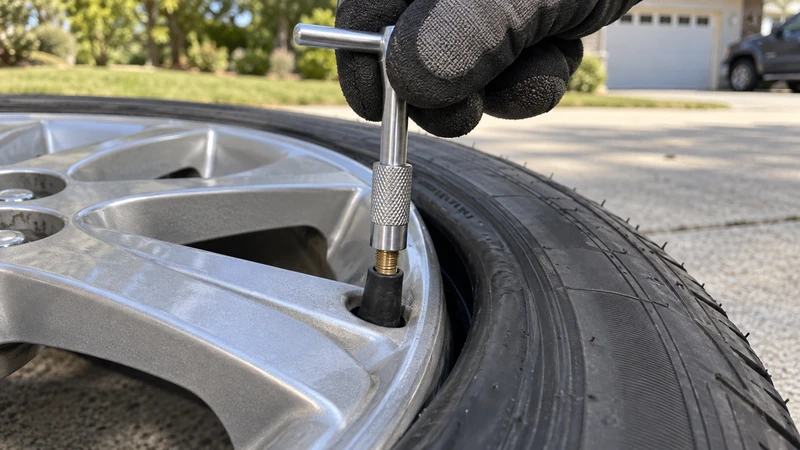
A rubber snap-in stem is a realistic driveway job with a valve stem puller kit ($10–$25). The tire stays on the wheel — you only need the bead pushed down locally near the stem. The sequence:
- Deflate the tire completely — remove the valve core and let it empty. (Set the core aside if it's new; a replacement kit includes one.)
- Break the bead near the stem only. Position the stem at the bottom, and press the sidewall down beside it — a bead breaker tool, or careful body weight on a board, pops the bead loose in that one spot. You need just enough gap to reach the stem base.
- Cut/pull the old stem out from the inside with the puller tool threaded onto it.
- Lube and pull the new stem in — rubber-friendly lubricant on the base (never petroleum grease on rubber), thread the puller on, and pull until the base pops into place.
- Reinstall the core, reinflate to door-jamb PSI, and re-seat the bead (it pops audibly as pressure rises). Finish with the soapy-water test.
Honest assessment: the job is cheap but fiddly, and a botched seat means a tire that loses air faster than the one you started with. If the bead won't cooperate in 15 minutes, a tire shop does the whole thing for $20–$60 with a machine — that's a fair price for zero frustration.
TPMS Stems Are a Different Job
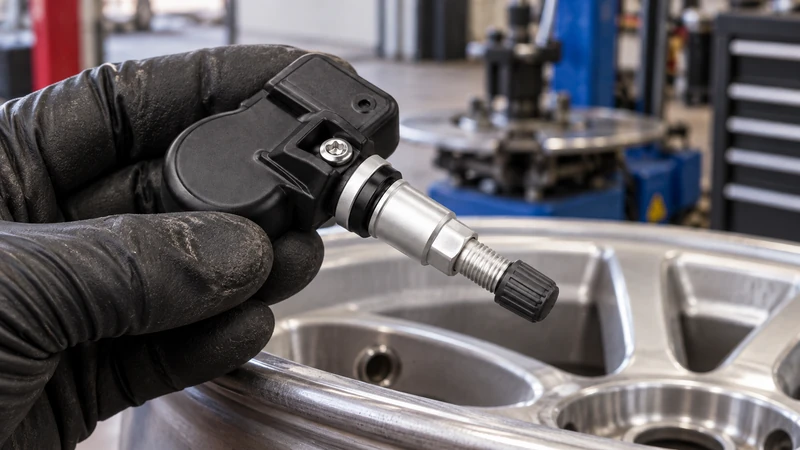
On a car with direct TPMS (2008+ in the US), the "valve stem" is the business end of a sensor unit sitting inside the wheel. A cracked TPMS stem or corroded nut isn't a puller-tool job — the tire comes off on a machine, the sensor is serviced or replaced, and the car needs a relearn afterward. That's the $90–$150 row in the cost table, and it's why.
The one TPMS thing you can DIY: the external service kit — the cap, core, nut, and seals on the outside of the stem. If the sensor works and only the external hardware is corroded, that's a cheap hand-tool fix. Anything involving the sensor body itself goes to the shop (what the sensor is and how it fails: the TPMS sensor guide; relearn procedures: the reset guide).
When to Replace Valve Stems
Four triggers: it leaks (confirmed at the base with soapy water); the rubber is cracked — bend the stem gently and look for crazing at the base, the classic age failure; every tire change, because rubber stems age on the tire's schedule and cost $2 while the tire is already off; and after any curb strike that hit the stem area. What doesn't count: a missing cap. The cap keeps dirt out and matters, but the seal lives in the core — a capless stem isn't a leak, just an invitation.
The 15-Minute Shop Visit
At a tire shop this is one of the cheapest tickets in the building: wheel off, tire pushed down on the machine, stem swapped, rebalanced if needed, back on — often while you wait, no appointment. Tell them the symptom ("loses 3 PSI a week, bubbles at the stem base") so they don't sell you a dismount you don't need — and if you're quoted for a full TPMS sensor on a rubber-stem car, get a second opinion. After any stem or sensor work, your pressures get set fresh: make it the start of the monthly habit.
Key takeaways
- ✓Shop cost: $20–$60 per tire for rubber stems, $90–$150 with TPMS. The part is $2–$5; you're paying for the tire machine.
- ✓Diagnose first with soapy water: bubbles at the tip = $3 valve core, two-minute fix. Bubbles at the base = stem replacement.
- ✓Rubber stems are DIY-able with a $10–$25 puller kit — deflate fully, break the bead locally, pull out, pull in.
- ✓TPMS stems are shop jobs: the sensor lives inside the wheel and needs a relearn afterward.
- ✓Replace rubber stems with every tire change — they age on the tire's schedule and cost nothing while the tire is off.
Frequently Asked Questions
How much does valve stem replacement cost?
At a shop: $20–$60 per tire for a standard rubber stem (part $2–$5, the rest is labor and the tire machine). TPMS-equipped wheels run $90–$150 per tire because the sensor's service parts and relearn add cost. DIY with a puller tool: $5–$15 in parts. If only the valve core is leaking, the fix is a $3 core and two minutes.
Can you replace a valve stem without removing the tire?
For a rubber snap-in stem, yes — a $10–$25 valve stem puller kit lets you push the bead back locally and swap the stem with the tire still on the wheel. You don't need to fully dismount the tire, but you do need to push the bead down near the stem to reach the base. TPMS sensor stems are different: the sensor sits inside the wheel and the job belongs to a shop.
Is a leaking valve core the same as a bad valve stem?
No — and confusing them costs people real money. The core is the small spring-loaded valve screwed inside the stem; it unscrews with a cheap core tool in seconds, no tire work needed. The stem is the whole rubber or metal body through the rim. Confirm which one leaks with soapy water: bubbles at the tip = core, bubbles at the base of the stem = stem.
How long do valve stems last?
Rubber stems age with the tire — heat, ozone, and flexing degrade the rubber in roughly a tire's lifespan, which is why tire shops replace them with every tire change (and why you should too; it's a $2 part while the tire is already off). TPMS sensor stems follow the sensor battery: 5–10 years.
Can I drive with a leaking valve stem?
Briefly, to get to a shop — but don't sit on it. A leaking stem is a slow leak by definition, and slow leaks become underinflation, which overheats the tire's structure on the highway. If the tire is visibly low or drops more than a couple PSI a day, treat it as urgent. Top it up and fix it within days, not months.
Should I replace all four valve stems at once?
With new tires, yes — always; they're a $2 part and the tire is already off the rim. Outside of a tire change, replace the one that's leaking and inspect the rest: if one rubber stem has cracked from age, its three siblings are the same age and not far behind.
References
- AutoNation Mobile Service — Valve stem replacement cost ($25–$40 typical: parts $5–10, labor $20–30; rubber snap-in cheapest)
- ThePricer — Tire valve stem replacement cost ($20–$60 standard / $90–$150 TPMS per tire; DIY parts $5–$15 / $25–$60)
- SlashGear — Can you replace a tire valve stem yourself? (core vs stem distinction, puller-tool DIY without full dismount, TPMS = shop job)